

Urgent Care Is the Digital Front Door to Healthcare
Close to half the US population now seeks care here. Patients search their symptoms, book a slot online and walk in the same day.
01
Search
The visit begins with symptoms typed into a phone
02
Book
A slot chosen online, often for the same afternoon
03
Walk in
The digital front door opens onto a physical clinic
The Setting
The Walk-In Front Door of Modern Care
Same-day acute illness, no appointment, no existing provider relationship required.
Scheduled · Routine
Family Doctor
Wellness, prevention, chronic care.
Walk-In · Same Day
Urgent Care
Too urgent or inconvenient to book.
Severe · Emergency
Emergency Room
Higher acuity, hospital-level care.
Urgent care today
15,000+
Urgent-care centers in the US
~200M
Urgent-care visits a year
~65M
Respiratory visits: #1 reason patients walk in
≈$3B
Respiratory testing market in US urgent care
Sources: Urgent Care Association; Experity case mix.
The Shift
Patients Keep Moving Toward Urgent Care
Change in visits per 1,000 people
2018 → 2022 · 2018 level at baseline
Urgent care
+34.5%
Primary care
+4.8%
Emergency room
-2.5%
Cost per visit
10x cheaper
Urgent care
ER
Time to be seen
3x faster
Urgent care
ER
No primary care provider
45%
of adults 18 to 29 have no family doctor to go to
Sources: Health Care Cost Institute (2024), commercially insured; KFF; Aflac.
The Requirement
Closing the Care Loop at Every Patient Encounter
| Rapid antigen | Single-target POC | Mini-panels | Lab multiplex PCR | VedaBio | |
|---|---|---|---|---|---|
| Speed | ✓ | – | ✗ | ✗ | ✓ |
| Simplicity | ✓ | – | – | ✗ | ✓ |
| Breadth | ✗ | ✗ | – | ✓ | ✓ |
| Accuracy | ✗ | ✓ | ✓ | ✓ | ✓ |
| Economics | – | ✗ | – | ✗ | ✓ |
✓ MEETS
– PARTIAL
✗ MISSES
VedaBio’s platform is in development and is not available for sale. The VedaBio column above describes design intent. Performance has not been verified.
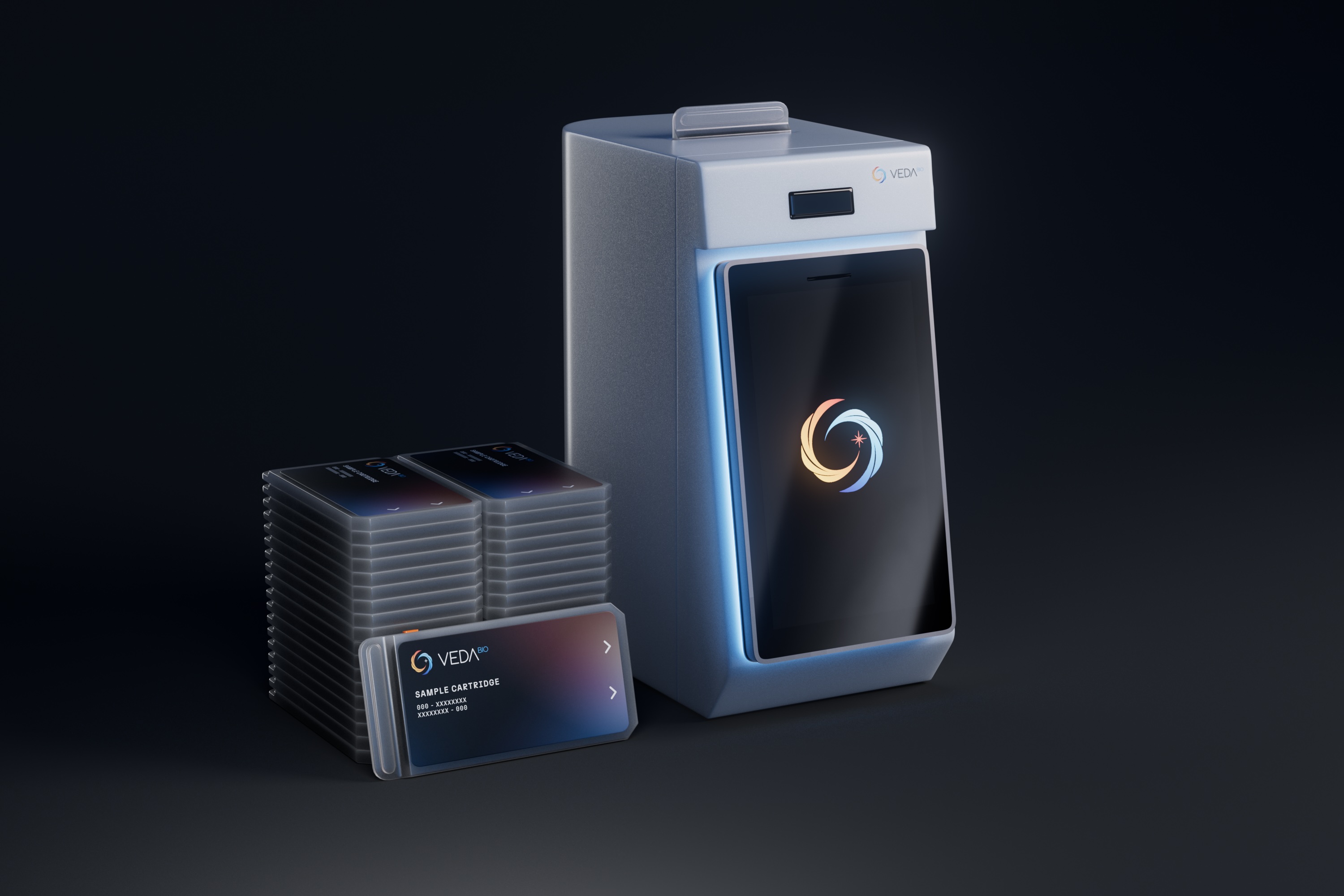
Instrument · Single-use cartridge
The Consequence
What Happens When There Are No Answers
A missing diagnosis becomes a prescription, a return visit, or a higher-cost referral.
Unnecessary Prescriptions
Prescribing without a confirmed diagnosis drives unnecessary use of antimicrobials and steroids, a leading driver of resistance.
★★★★★
Poor Patient Satisfaction
No answer, or a delayed answer, erodes patient satisfaction, a critical driver of repeat visits and referrals for urgent care providers.
$$$$
Higher Cost
Send-out testing adds cost, and diagnostic uncertainty leads to onward referrals into higher-cost settings and repeat visits.
This Is the Problem We Set Out to Solve
Hospital-grade answers, in the room, before the patient leaves.